What goes around comes around
January 23, 2026
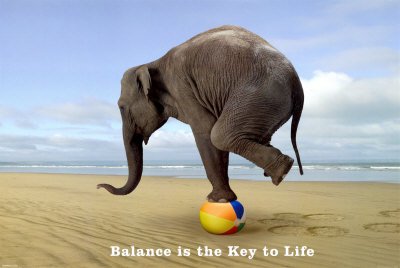
Balance may be the most universal law in existence. We’ve heard it expressed in countless ways: “What goes around comes around,” “opposites attract,” “the circle of life.” Each points to the same underlying truth—life naturally seeks equilibrium. And that principle applies to nearly everything you think, say, and do.
Nature is one of our greatest teachers. When you’re trying to decide what is true and what isn’t, a simple test can help:
Can you find a parallel in nature?
If an idea aligns with a natural law, it’s often grounded in truth. If it doesn’t, it’s usually suspect.
Where people get into trouble is when they discover a rare exception and try to turn it into the rule. That creates two problems.
First, rules exist for a reason. Every rule has exceptions, but exceptions don’t erase the rule itself. Language gives us a simple example: “I before E, except after C.” The rule still stands—even though it has exceptions.
Second, anytime you hear an absolute, you should pause. Absolutes are almost always false.
When a spouse says, “You never listen,” or “You always do this,” they aren’t speaking truth—they’re expressing emotion. Even the things we assume are permanent aren’t. We say the sun “always” rises and sets, but zoom out far enough in time and even the sun has an expiration date.
This same thinking applies to belief systems. When someone declares, “Alcohol is bad,” what they often mean is, “Alcohol is dangerous when misused.” The absolute becomes a tool of control. A more honest and timeless principle is: Everything in moderation.
Different people have different limits. What is balanced for one person may be excessive for another. But the governing law remains the same: too much of anything—even something good—can become harmful.
So when you’re confronted with claims of “my truth” or sweeping declarations about how the world works, run them through a simple filter:
Does this reflect balance?
Does it resemble a rule found in nature?
Does it avoid absolutes?
If it does, you’re probably on solid ground. If it doesn’t, proceed with caution. Nature rarely lies—and balance is one of its most reliable guides.
Want the full transformation?
Learn more about Live a Fearless Life and grab your copy.